
Urban Beekeeping Apprenticeship: 2027
Get ready!
The New York City Beekeepers Association (NYCBA) is proud to announce the anticipated return of our Urban Beekeeping Apprenticeship Program for the 2027 season, administered by Andrew of Andrew’s Honey.
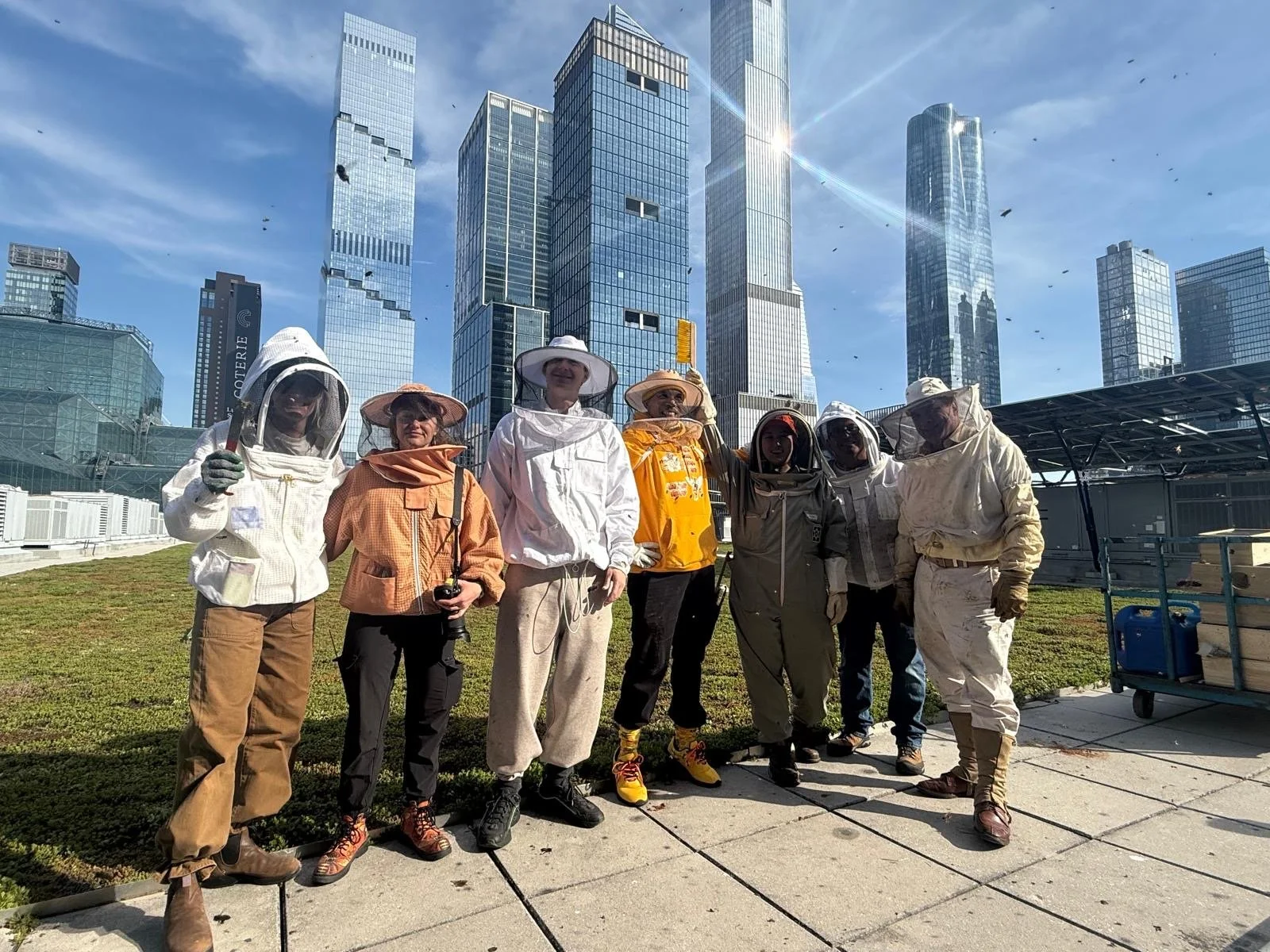
This is the original, most comprehensive, and the most fun urban beekeeping apprenticeship in New York City. It is designed to provide participants with a complete beekeeping education, following the honey bee and the beekeeper through an entire season: from the first classroom sessions of late winter, through spring buildup and swarm season, the summer honey flow and harvest, and finally the preparation of colonies for winter. We work beehives primarily within the five boroughs, but also in Long Island, New Jersey, Philadelphia, Westchester and Fairfield Counties. You will get your hands good and sticky.
Most importantly, this is not simply a series of beekeeping classes. It is a working apprenticeship led by NYCBA founder Andrew Coté and members of his professional beekeeping team.
Learn From Andrew Coté and His Team
The apprenticeship is directed and taught by Andrew Coté, founder of the New York City Beekeepers Association and one of the best-known urban beekeepers in the United States.
Andrew began keeping bees as a child and comes from a multigenerational beekeeping family. He has spent decades working with honey-bee colonies and has been at the forefront of modern urban beekeeping in New York City. He founded the NYCBA in 2007 and helped advocate for and draft regulations that led to the legalization of beekeeping in New York City.
Andrew is also the author of Honey and Venom: Confessions of an Urban Beekeeper, published by Penguin Random House, and contributed the urban-beekeeping material to Beekeeping for Dummies. He is Executive Director of Bees Without Borders, through which he has taught and worked with beekeepers in communities around the world. He is also a Fulbright Scholar, former college professor and lifelong educator.
His bees and beekeeping work have been featured by The New York Times, The Wall Street Journal, CNN, CBS, NBC's Today, Good Morning America, The Martha Stewart Show and numerous other national and international media outlets.
But the important qualification for this apprenticeship is considerably simpler: Andrew keeps bees for a living.
Immersive Learning
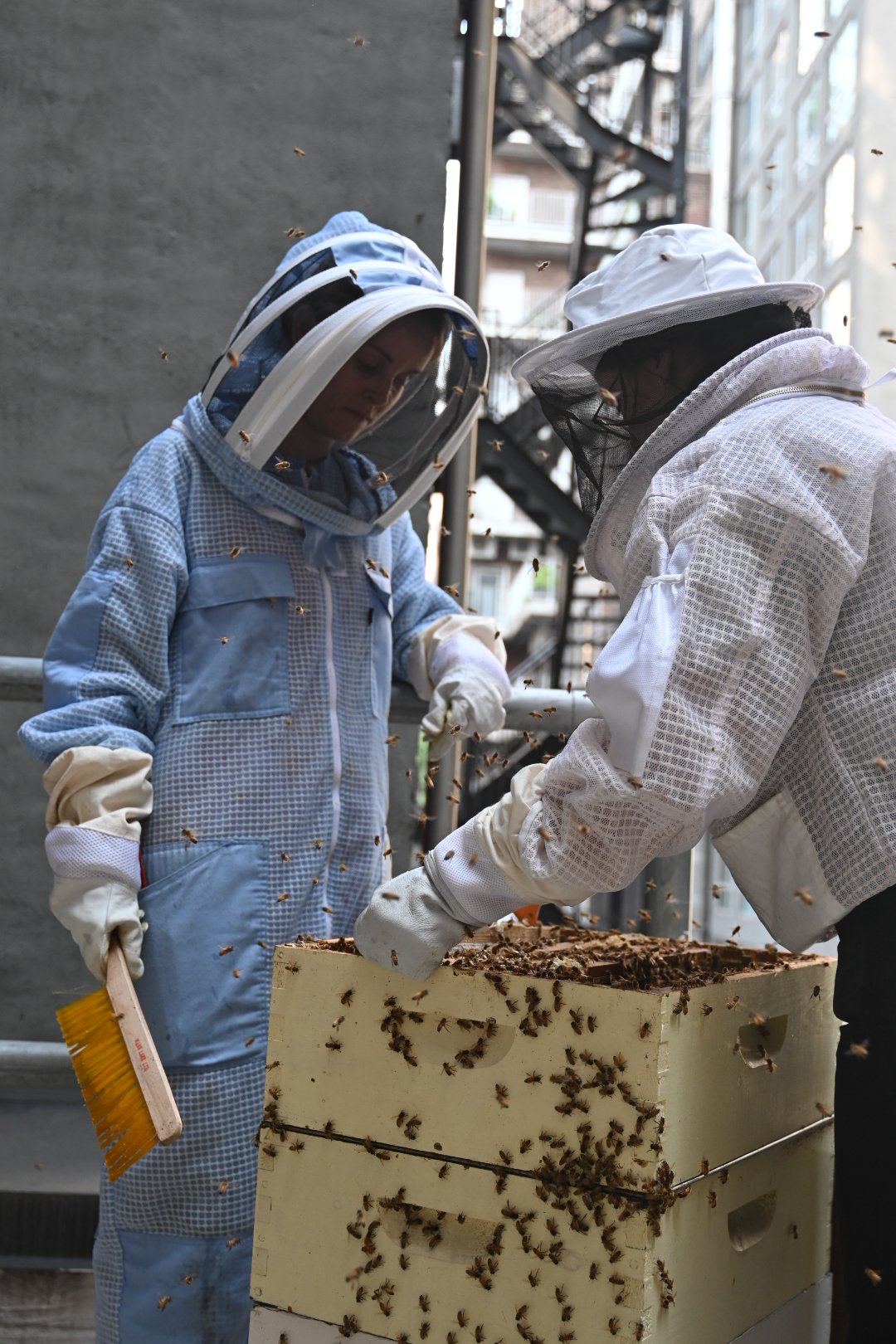
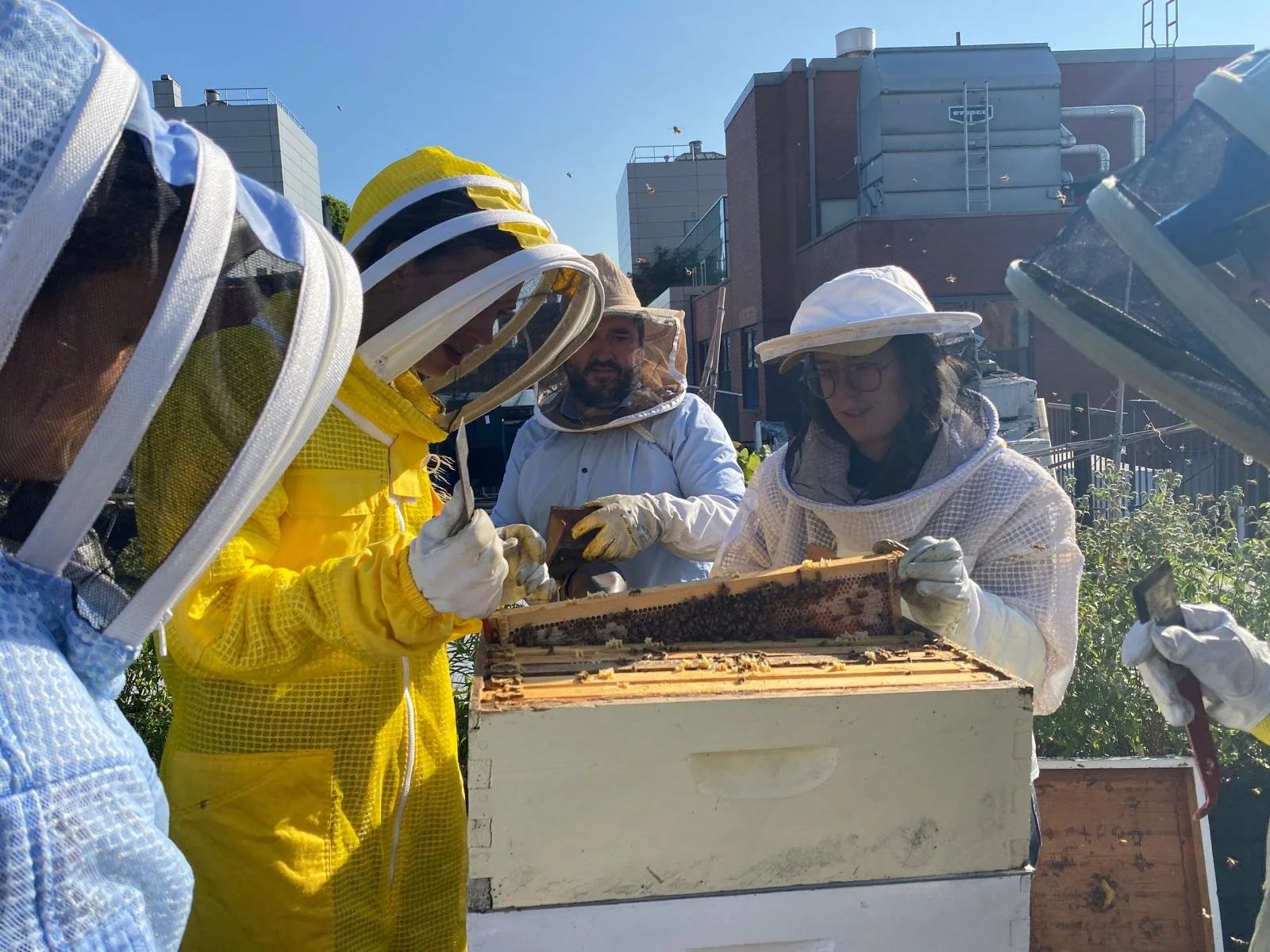
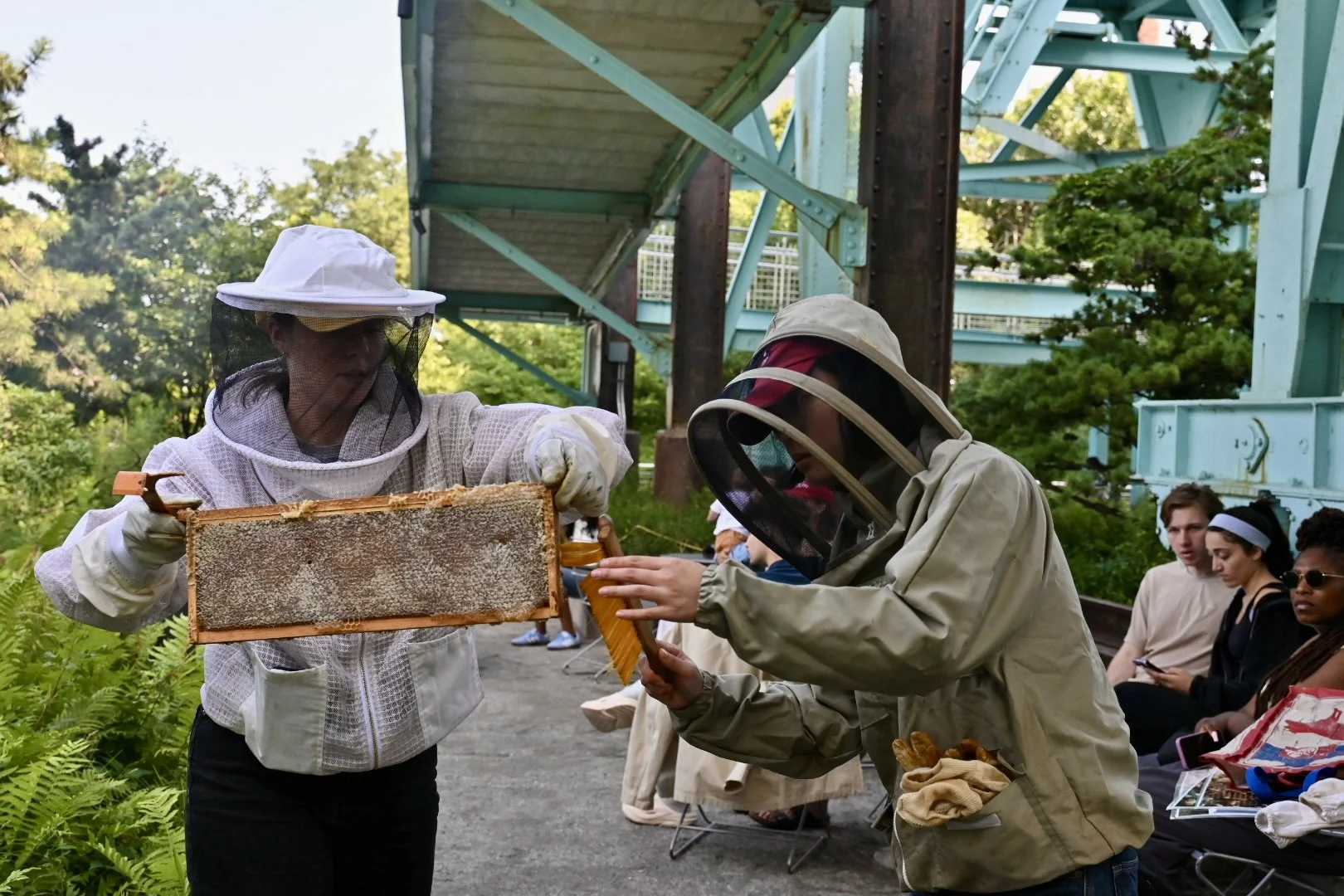
Apprentices are not learning solely from lectures, books or demonstrations. They are accompanying Andrew and members of his experienced beekeeping team while they manage real colonies throughout New York City.
Members of Andrew's team will participate in both classroom and hands-on instruction throughout the season. Apprentices will therefore be exposed to different experienced beekeepers, different approaches and different ways of solving the problems that inevitably arise inside a colony. Guest beekeepers, specialists and former NYCBA apprentices will also occasionally join the program and share their knowledge.
The goal is not merely to teach you facts about honey bees. The goal is to teach you how to think and work like a beekeeper. Several graduates of this program have gone on to have their own beekeeping businesses right here in New York City, and elsewhere in the world.
We Begin in the Classroom
Our 2027 program will begin in late February/ early March, with a combination of Zoom and in-person classroom sessions covering the theory and fundamentals of beekeeping before we begin opening colonies.
While the bees are still clustered in their hives, we will do some clustering of our own and begin with the fundamentals, including:
Honey-bee biology and behavior
The life cycle and organization of the colony
Langstroth hive equipment and its components
Basic hive management
Seasonal colony development
Pests and diseases
Swarming and reproduction
Urban beekeeping considerations
Preparing for hands-on hive work
Classes make extensive use of photographs and short videos from our own apiaries so that what we discuss in the classroom connects directly with what apprentices will soon encounter inside actual colonies.
And at this stage, at least, there is absolutely no danger of being stung.
Then We Head to the Rooftops
As temperatures rise—generally beginning in late March or early April, depending entirely upon the weather—the classroom gives way to the apiary.
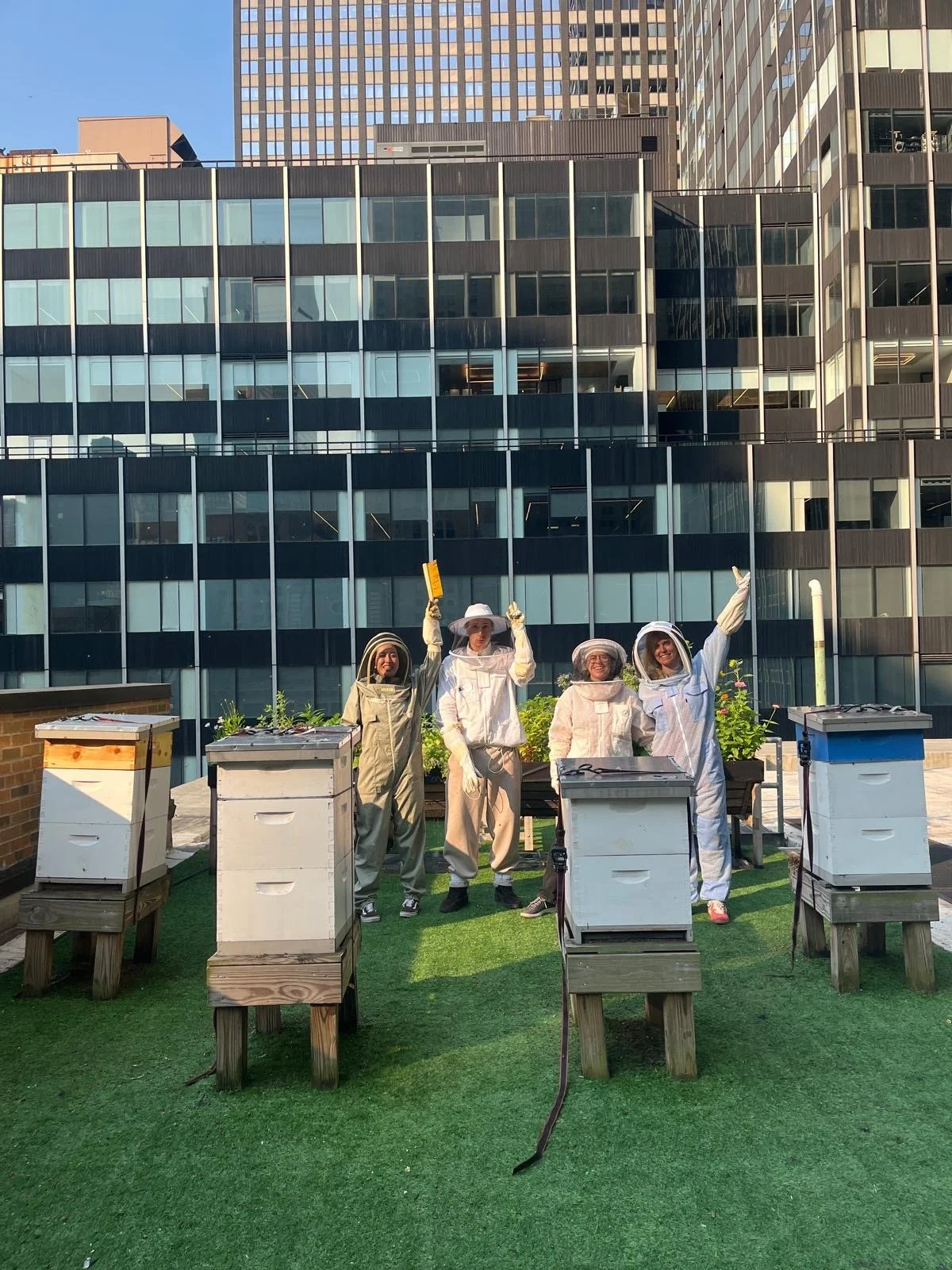
From spring through October, apprentices will have regular opportunities to work alongside Andrew and his team with honey-bee colonies in working and educational apiaries throughout New York City.
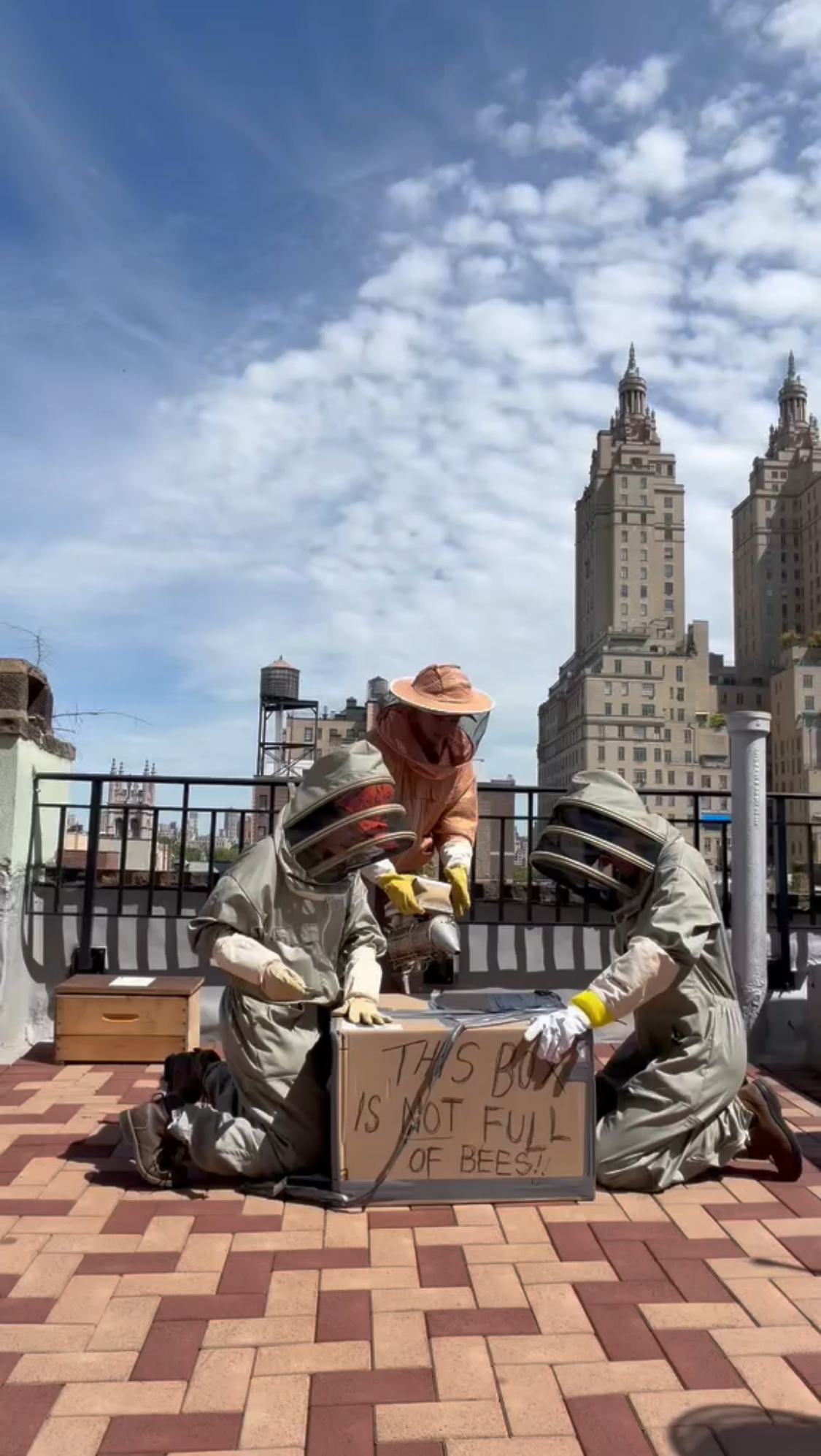
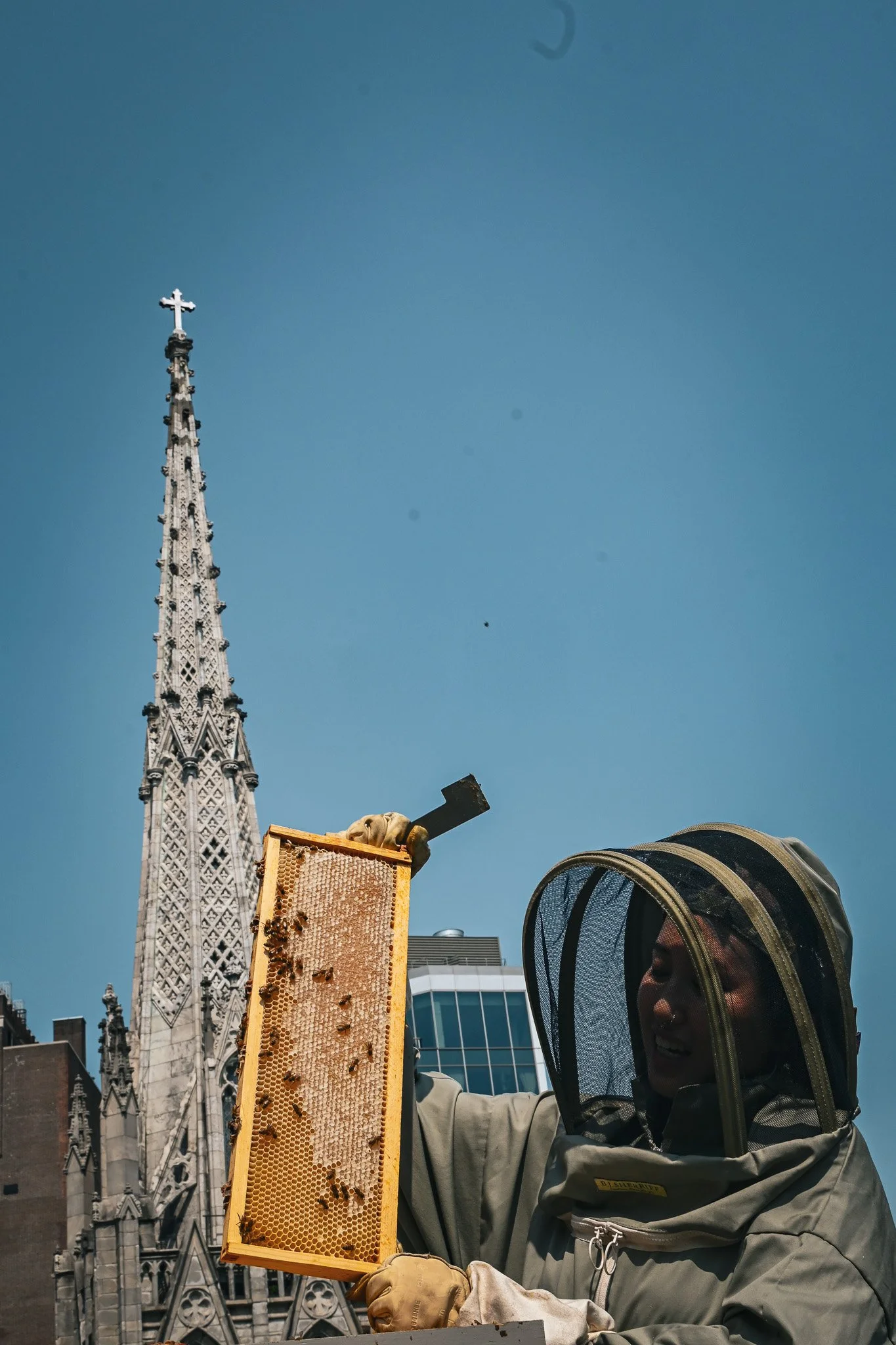
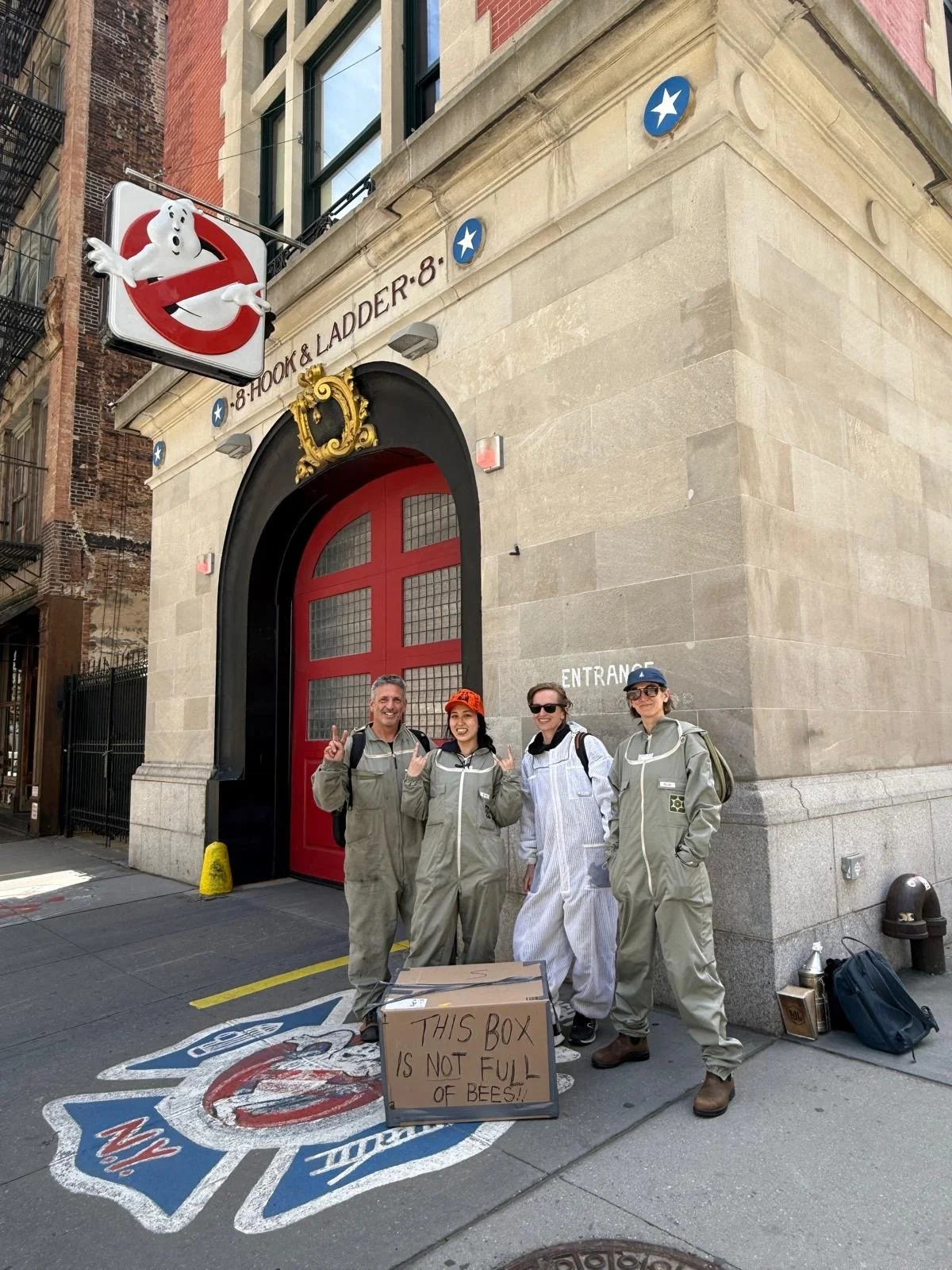
Our hives are located in the kinds of places that make NYC beekeeping unique: rooftops, hotels, restaurants, retail properties, private residences, community gardens and other urban locations.
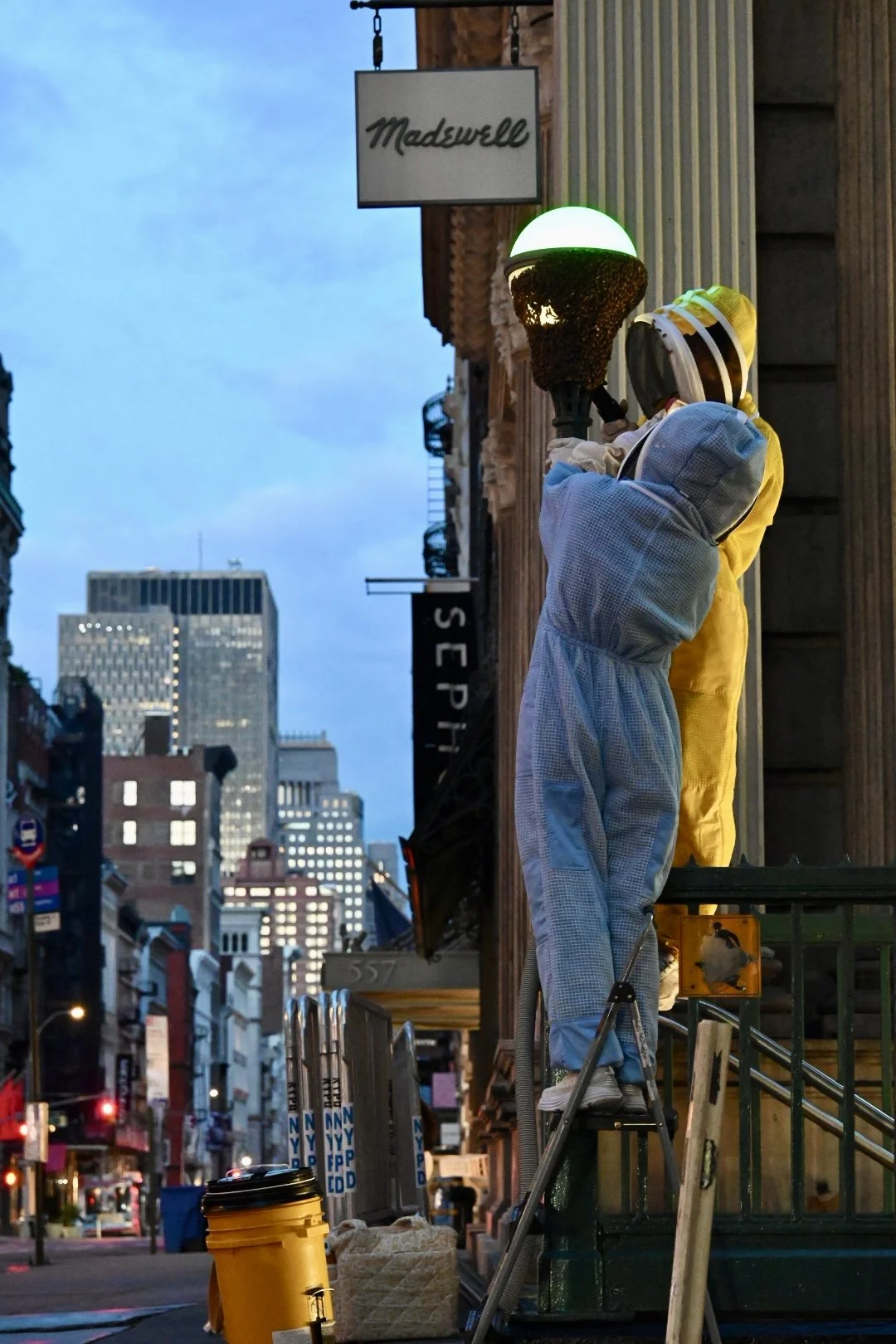
This means apprentices don't simply learn how to inspect a hive sitting conveniently in one teaching yard. They experience the realities of keeping bees in a dense city: getting equipment onto rooftops, managing colonies in unusual spaces, dealing with swarms, moving colonies, responding to changing weather, harvesting honey and solving the unexpected problems that inevitably arise during a real beekeeping season.
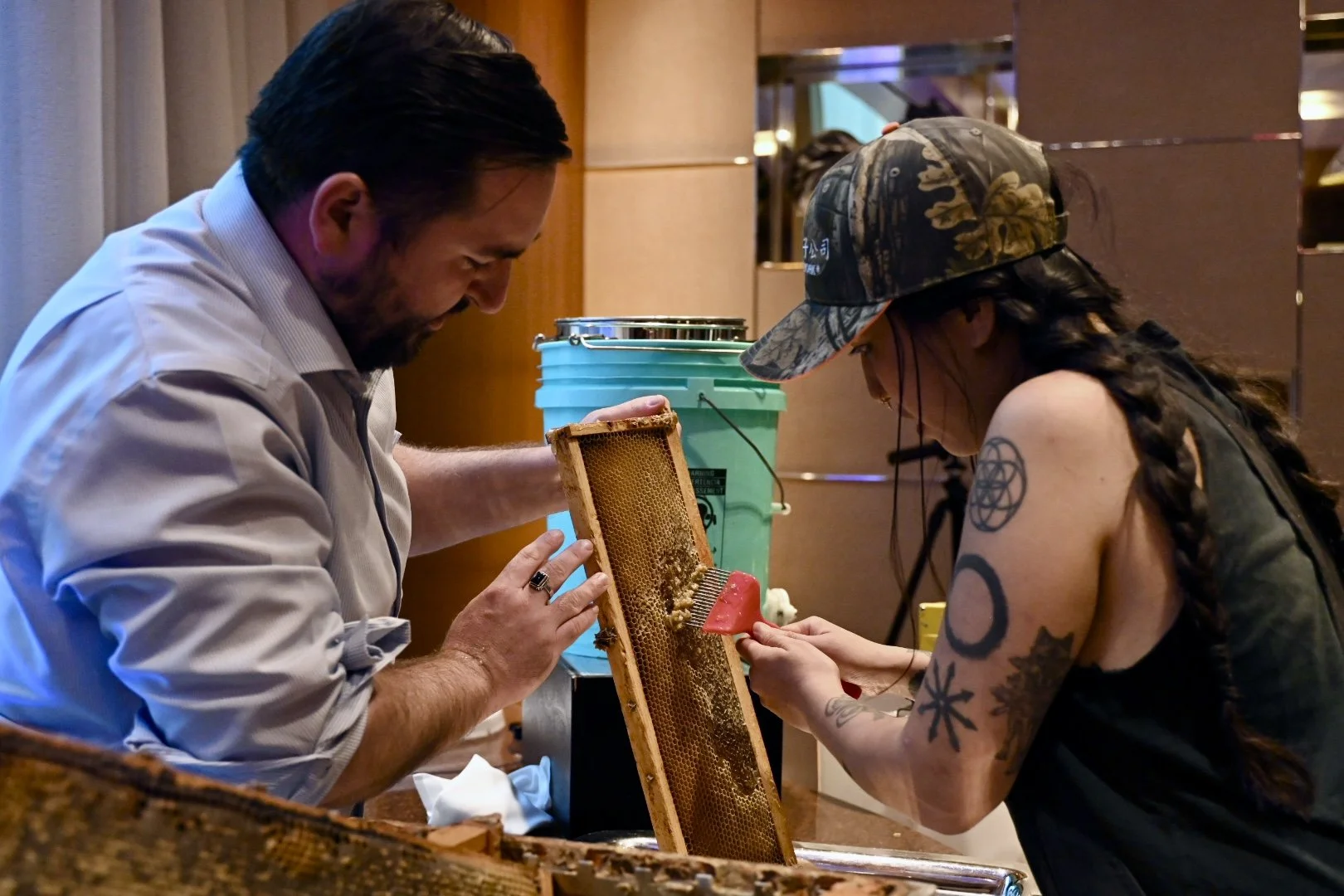
Hands-On Experience May Include
Building and assembling hive equipment
Installing new colonies and packages of bees
Regular hive inspections and maintenance
Seasonal colony management
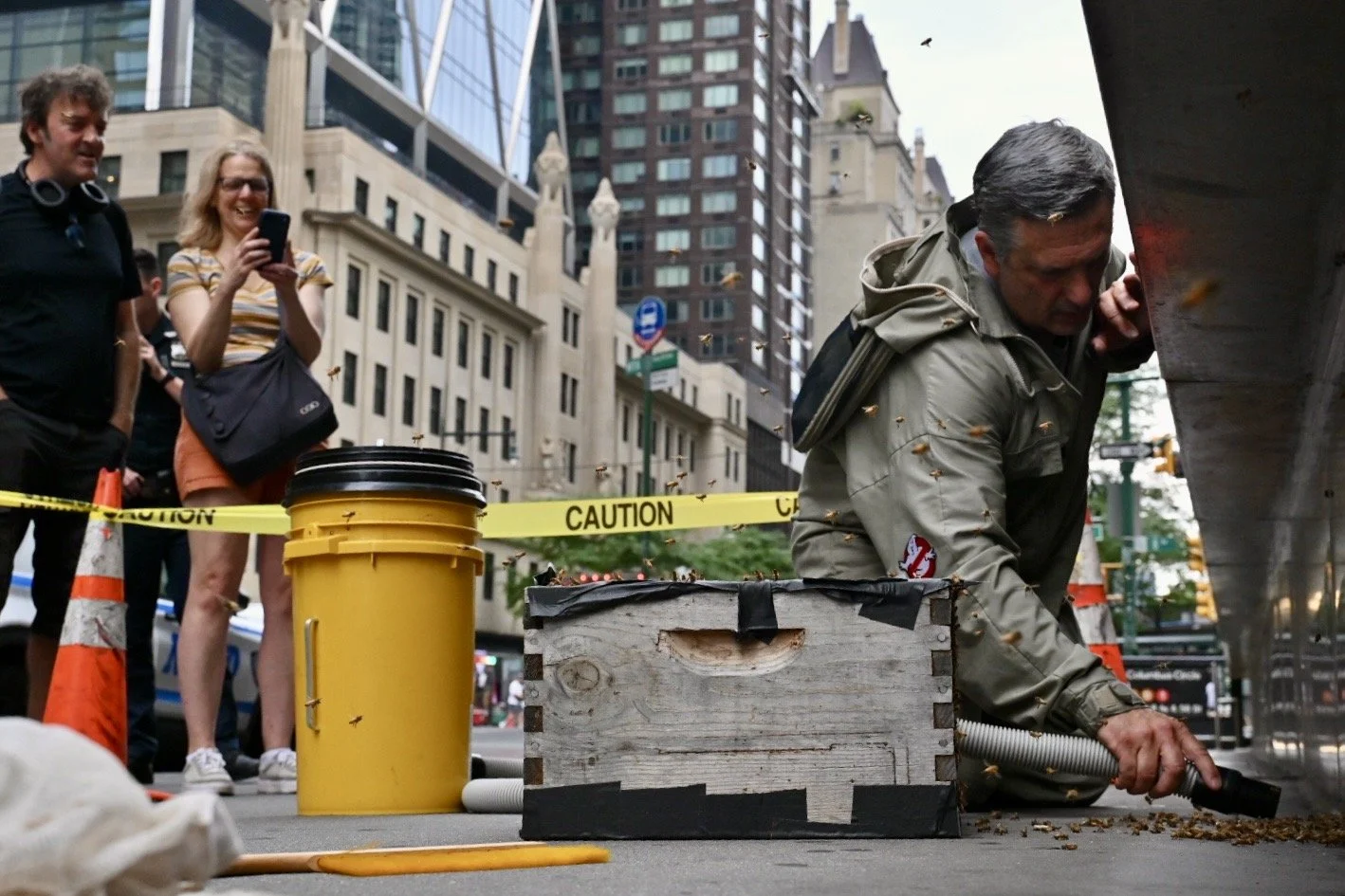
Swarm prevention, management and capture
Identifying pests and diseases
Disease prevention and treatment
Splitting and combining colonies
Queen and brood assessment
Hive relocation
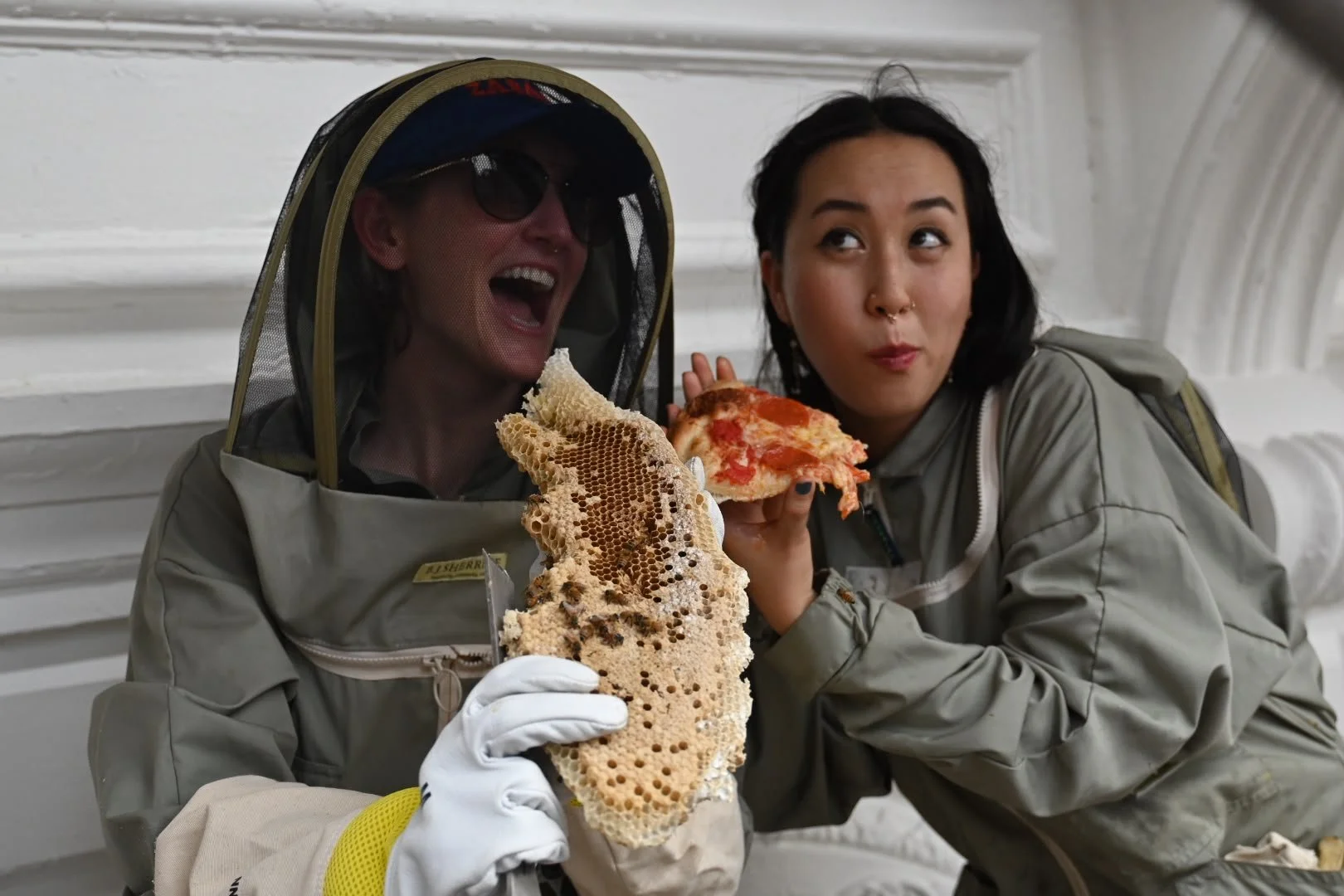
Feral honey-bee colony removal
Honey harvesting
Honey extraction and processing
Preparing colonies for winter
Because we are working with living colonies rather than a fixed curriculum, exactly what apprentices experience will vary from year to year.
Bees have a remarkable ability to change the lesson plan.
350+ Hours of Potential Hands-On Experience has been average
One of the defining features of the NYCBA apprenticeship is simply how much access to actual beekeeping it provides in a wide variety of locations.
In a typical season, the program offers approximately 350+ hours of potential hands-on beekeeping experience.
No one is required or expected to attend all of those hours.
But for someone who wants to immerse themselves in beekeeping, the opportunity is there. From April through July, there may be opportunities to work bees as many as seven days per week.
The more time you spend working colonies, the more situations you encounter. And the more situations you encounter, the more quickly the theories discussed in March begin to make sense.
There is simply no substitute for opening hive after hive, seeing healthy colonies as well as struggling ones, observing queens, brood patterns and food stores, experiencing swarm season, recognizing problems and watching how experienced beekeepers respond to them.
That repetition is where an education in beekeeping becomes experience.
A Real Beekeeper’s Schedule
Prospective apprentices should understand that beekeeping does not operate on a classroom schedule.
Sunday mornings are our most regular meeting time once temperatures permit us to work colonies. However, opportunities arise throughout the week, sometimes very early in the morning and sometimes with relatively short notice. As much as possible we will accommodate student schedules. Once the weather permits, we will meet as early as 6:00AM so those who need to get to their 9 to 5 might get a little bee time in before their grind.
Nobody is required to attend every session, and they may join and drop out as their personal schedule dictates.
The program is deliberately structured so apprentices can participate according to their schedules. Someone who wants hundreds of hours of hands-on experience can pursue that opportunity; someone with a conventional full-time job can attend the sessions that fit his or her schedule.
Weather, temperature, traffic, swarm calls, colony conditions and the changing needs of the bees all affect our plans. Meetings therefore sometimes change or are announced on short notice.
We use WhatsApp to keep everyone informed in real time about upcoming opportunities. These groups also become a place for apprentices to ask questions and share the hundreds of photographs and videos inevitably accumulated over a season of getting your bee thing on.
The unpredictability isn't a flaw in the program.
It is part of learning to become a beekeeper.
Apprenticeship Tuition
Tuition for the full 2027 NYCBA Urban Beekeeping Apprenticeship is $3,500.
A $500 non-refundable deposit is due upon acceptance and is required to reserve your place in the program.
The remaining $3,000 balance is due on or before April 1, 2027.
Accepted applicants may pay by:
Cash
Check
Wire transfer
Venmo
Apple Pay
Credit card
Please note: The $3,500 tuition reflects payment by cash, check or wire transfer. Payments made by credit card, Apple Pay or Venmo are subject to an additional 5% processing fee. There I absolutely no exception to the payment schedule. Sorry, but over two decades the amount of “I will pay you later” and “I can give you the rest by the start of May” has added up to quite a lot, and we no longer consider any exceptions for any reason.
Application Process
Admission to the NYCBA apprenticeship is intentionally limited.
We generally accept no more than eight apprentices each season.
Keeping the group small is an important part of the program. It allows apprentices substantially more direct interaction with Andrew, his team, guest instructors and, most importantly, the bees themselves.
Applications for the 2027 season will be reviewed on a rolling basis until all available positions have been filled. Because admission is rolling, applicants who apply later should understand that classroom instruction may already have begun.
Hands-on apiary work is expected to begin in late March or early April 2027, depending entirely upon weather and temperatures.
If you are looking for a few hours of classroom instruction about honey bees, there are many excellent courses available in New York.
If you want to spend an entire season learning directly from professional beekeepers while actually keeping bees throughout New York City, this apprenticeship was created for you.
Important Information
Apprentices must be 18 years of age or older.
Because enrollment is extremely limited, we are unable to offer scholarships, tuition reductions or payment plans. Once payment is made, there are no refund for any reason.
We look forward to welcoming the NYCBA Apprenticeship Class of 2027 and to another season of keeping bees above the streets of New York City!
Apply here!